
Types of Sitemaps: XML, HTML, and Visual
Websites use different types of sitemaps to help search engines and visitors understand their structure. Each sitemap format serves a specific purpose and works best in different situations depending on the size, complexity, and goals of a website.
On this page, you’ll learn the differences between XML, HTML, and visual sitemaps, how each format is used, and when it makes sense to use one or multiple sitemap types together.
XML Sitemap
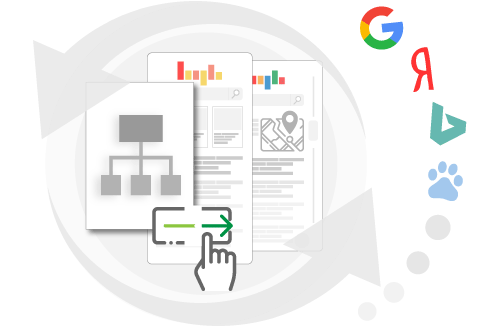
An XML sitemap is a machine-readable file designed specifically for search engines. It lists the URLs of a website and provides additional signals such as last update time and page importance, helping search engines crawl and index content more efficiently.
XML sitemaps are especially useful for large websites, new sites, frequently updated content, or pages that are not easily discoverable through internal links. While an XML sitemap does not directly improve rankings, it helps ensure that important pages are discovered and indexed correctly.
Learn more about creating and maintaining an XML sitemap using our XML Sitemap Generator.
HTML Sitemap
An HTML sitemap is a human-readable page that displays a structured list of links to the most important sections and pages of a website. Unlike XML sitemaps, HTML sitemaps are designed for visitors rather than search engines.
HTML sitemaps can improve user experience by helping visitors quickly find content, especially on websites with many pages or complex navigation. They can also support internal linking and accessibility by making site structure more transparent.
Learn how to generate an organized HTML sitemap with our HTML Sitemap Generator.
Visual Sitemap
A visual sitemap provides a graphical representation of a website’s structure. It is commonly used during planning, redesign, or optimization phases to map out page hierarchy and relationships before or after a site is built.
Visual sitemaps are widely used by web designers, developers, and SEO professionals to collaborate, identify structural issues, and plan improvements to navigation and user experience. They are not submitted to search engines but play an important role in organizing and communicating site architecture.
Explore interactive website mapping with our Visual Sitemap Generator.
Do You Need More Than One Sitemap?
In many cases, using more than one sitemap format provides the best results. XML sitemaps help search engines discover and index content, while HTML sitemaps improve navigation and usability for visitors. Visual sitemaps are often used internally to plan or optimize website structure.
Small websites may only need an XML sitemap, while larger or more complex projects often benefit from combining multiple sitemap types to support both search engines and users throughout the site’s lifecycle.
Sitemap Tools Available at MySitemapGenerator
MySitemapGenerator provides dedicated tools for creating and managing different sitemap formats, allowing you to choose the solution that best fits your website’s needs. Each tool is designed to automate sitemap creation while following technical and usability best practices.
Whether you need a sitemap for search engines, visitors, or internal planning, you can generate and maintain your sitemaps without manual work or technical setup.


 Secure Checkout